

There are colleges looking for basketball players right now—but most athletes waste time emailing coaches who aren’t recruiting their position. College Basketball Openings helps you target the right programs by showing current recruiting needs posted by coaches. Whether you’re a high school junior or senior, AAU player, post-grad, or transfer, this guide will show you how to use openings to reach coaches who are actually looking.
By: College Basketball Openings Team • Founded 2020 • Updated daily
Questions/corrections: [email protected]
“Updated daily”
“Openings come directly from coaches”
“Shows position + type of recruit needed”
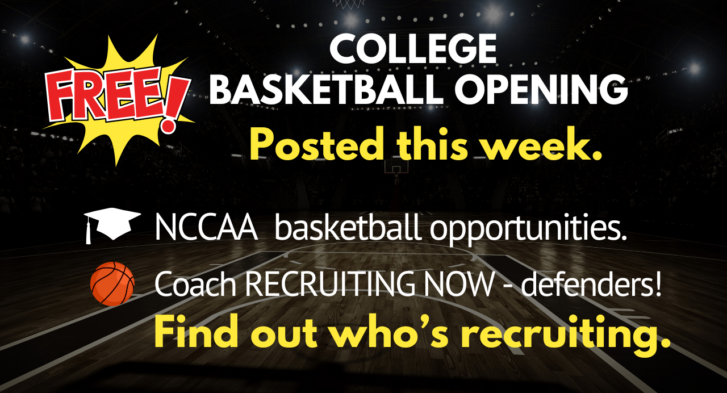
“One free openings weekly (look for FREE tag)”
“Opening Closed after 12 days”
We feature 1 FREE opening each week — look for the FREE tag below.
Here are the 12 Most Recent Colleges Looking for Players
Each opening lists what coaches are looking for. Stop guessing—target coaches recruiting your position right now.
🔒 No spam. Unsubscribe anytime. Trusted by athletes, parents and coaches every month.
1. Why Contacting Coaches Directly Is Key
One of the most effective ways to get noticed by college programs is to reach out directly to the coaches who are recruiting for your position. Waiting for them to find you may leave you unnoticed, especially when coaches are evaluating hundreds of players. With College Basketball Openings, you’ll have access to up-to-date information on which schools are recruiting and what positions they need, giving you the advantage of targeted outreach.
Here’s why reaching out to coaches is a game-changer:
- Stand Out from the Crowd: When you contact a coach directly, you’re showing initiative and desire. This proactive approach helps you stand out from other athletes who may be waiting for opportunities to come to them.
- Tailored Communication: By knowing exactly what positions a coach is recruiting for, you can personalize your message, making it clear how you fit their team’s needs. College Basketball Openings gives you the information you need to craft a message that resonates with the coach.
- Build Relationships Early: Coaches are more likely to remember and follow up with players who make the effort to reach out. By using College Basketball Openings, you can start building relationships early in the recruitment process, giving you an edge when it’s time to make final decisions.
2. Programs Looking for Players Like You
Colleges and universities across all divisions are always in search of talented basketball players to strengthen their rosters. Whether you’re aiming for the highest level of competition or looking to develop your skills at a more intimate program, there are opportunities across every level of collegiate basketball. Here’s an overview of what different divisions are looking for:
- NCAA Division 1: As the highest level of collegiate competition, Division 1 schools are searching for elite athletes with strong skills and a proven ability to perform under pressure. These programs often have larger rosters and offer full athletic scholarships. If you have a standout game and want to compete at the national level, D1 programs are constantly evaluating talent.
- NCAA Division 2: Division 2 programs offer a balance between competitive basketball and academic focus. These schools typically have smaller rosters and offer partial scholarships. Coaches are actively looking for players who can contribute immediately and have the potential to develop into key starters over time.
- NCAA Division 3: While Division 3 programs don’t offer athletic scholarships, they focus heavily on academics and personal development. Coaches at D3 schools are seeking players who are passionate about basketball and looking to continue playing competitively while prioritizing their education. These programs are ideal for well-rounded student-athletes.
- NAIA: NAIA schools often provide a level of competition similar to NCAA Division 2, but with more flexibility and a smaller student body. NAIA programs offer scholarships and are actively looking for players who can fit into their dynamic teams, especially those who are versatile on the court.
- Junior Colleges (JUCO): JUCO programs are a great stepping stone for athletes looking to improve their skills and gain exposure before transferring to a four-year school. Many players who go through JUCO programs end up being recruited by Division 1 or Division 2 schools after proving themselves at the junior college level. Coaches at JUCOs are looking for players who want to grow and develop quickly.
By regularly checking College Basketball Openings, you’ll know exactly which programs are seeking players with your abilities, allowing you to focus on schools that need your skills.
3. What to Say When Reaching Out
When you’re ready to contact coaches, it’s essential to make a great first impression. Here’s a simple guide to reaching out:
- Introduce Yourself: Start with a brief introduction, including your name, high school or AAU team, and the position you play.
- Express Interest in Their Program: Mention the specific program and explain why you’re interested in their school and team. Referencing something specific, like their playing style or recent success, shows you’ve done your homework.
- Highlight Your Strengths: Be sure to include your key stats and skills that align with the position they are recruiting. Keep it concise but clear.
- Provide a Highlight Reel: Coaches appreciate being able to quickly evaluate a player’s abilities. Include a link to your highlight reel so they can see your game in action.
College Basketball Openings makes it easy to know exactly which coaches to contact and what positions they’re recruiting, so you can customize each message to fit the program’s needs.
4. Why College Basketball Openings Is Your Best Resource
While there are many platforms out there, College Basketball Openings is designed to give you the most direct path to contacting coaches who are actively looking for players. Instead of waiting for opportunities to come to you, use our resources to:
- Connect with Coaches Directly: We keep an updated list of coaches looking for players, ensuring that your outreach is targeted and effective.
- Access Real-Time Recruiting Needs: Our platform allows you to stay updated on the latest recruitment opportunities. You won’t have to guess which schools are looking for players—you’ll know.
- Increase Your Chances of Getting Noticed: By using College Basketball Openings to reach out to the right coaches, you’ll be putting yourself in the best possible position to secure a college roster spot.
5. Conclusion: Take Control of Your Recruitment Journey
The key to successful recruitment is being proactive, and with College Basketball Openings, you have the tools you need to reach the right coaches and position yourself for success. Don’t wait for the opportunities to come to you—take control of your recruitment by contacting coaches who are looking for players with your skills.
Visit College Basketball Openings regularly to stay updated on which schools are recruiting and how you can connect with the coaches who are ready to build their next great team. Your college basketball future starts here!
FAQ: How to Reach Out to College Basketball Coaches the Right Way
I’m nervous—what’s the right mindset when contacting coaches?
It’s normal to feel nervous, but reaching out is part of the process. Coaches are busy and often won’t find you unless you take initiative. A respectful, proactive message can open doors.
What contact info should I have ready before I email a coach?
Use a professional email address and check it daily. Make sure your phone number is correct and that you can answer calls or voicemails professionally.
Use a professional email address and check it daily. Make sure your phone number is correct and that you can answer calls or voicemails professionally.
Keep it polite, personal, and specific. Use the coach’s correct name, introduce yourself, and explain why you’re interested in their program.
How long should my message be?
Short and relevant. Coaches should be able to understand who you are and what you offer in 20–30 seconds.
What key details should I include?
Include your position, height, grad year, high school (or current team), and 1–2 key accomplishments (stats, awards, varsity/JV level, etc.). Then add links to your highlight video and recruiting profile.
Should I send the same message to every coach?
No. Coaches can spot copy-paste fast. Make one or two sentences unique to that program (style of play, academic fit, location, roster need, conference, etc.).
How important is proofreading?
Very. Spelling/grammar mistakes can hurt your first impression. Read it out loud once, then have a parent/coach/teacher review it before sending.
What’s the fastest way to avoid wasting time emailing coaches who aren’t recruiting?
Target coaches who are actively looking for your position. That’s why openings matter—they help you focus on the programs that are actually recruiting right now.
FAQ: Choosing a NCAA Division 2 School
What should I consider beyond basketball rankings when choosing a D2 school?
Rankings don’t tell the full story. Look at (1) fit for your position and size, (2) the coaching style and roster needs, (3) academics and your major options, (4) cost and available scholarship help, and (5) campus environment (location, size, and culture). The best choice is usually the program where you can develop, play meaningful minutes, and earn a degree you value.
How do I know if a D2 program is a realistic fit for me?
Compare your measurable profile to the roster: height/length for your position, playing style, competition level you’ve faced, and your production (stats + impact). If your film and measurables are similar to players already on the roster—or to recent recruits—that’s a strong sign of fit.
How important are academics when picking a D2 school?
Very. Make sure your GPA/test scores align with admissions, and confirm the school offers a strong program in your intended major. Also look for athlete support: tutoring, study halls, academic advisors, and graduation outcomes.
Does location really matter for recruiting and experience?
Yes. Location affects everything—climate, travel, cost of living, campus life, and your support system. Choose a place you can thrive for 4 years, not just a team you like for 4 months.
How does the D2 basketball schedule compare to Division 1?
D2 is still highly competitive, but the overall environment can be more balanced than many D1 programs. You’ll train hard and travel, but some athletes find they have more breathing room for academics, development, and campus life—especially in the offseason.
What’s the best way to get noticed by D2 coaches?
Be proactive: email coaches with a short intro, your measurables, and film links. Most importantly, target programs that are actively recruiting your position—your response rate goes way up when you contact coaches who actually need what you are
How many NCAA Division 2 basketball programs are there?
There are hundreds of D2 programs across the U.S., which means many legitimate opportunities for players who target the right level and fit.
.FAQ: Understanding the College Basketball Recruiting Process
What is the first step in the college basketball recruiting process?
Build a clear recruiting profile with your basics (position, height, grad year), academics (GPA/test scores), and your best film links. Think of it as your “basketball resume” that a coach can scan quickly.
What should a recruiting profile include?
At minimum: position, height, grad year, team/high school, key stats/achievements, GPA (and test scores if available), contact info, and links to highlights/full-game film.
How do I choose which schools to contact?
Start with programs that match your level and goals—athletic fit, academics/major, location, and culture. Then prioritize schools that are actively recruiting your position (your response rate is much higher when there’s a current need).
What should I include when emailing a college coach?
Keep it short and organized: (1) coach’s correct name, (2) who you are (position/height/grad year/team), (3) 1–2 quick accomplishments, (4) film links, (5) academics, and (6) your contact information.
How important is communication during recruiting?
Very. Use an email you check daily and respond quickly and professionally. Missed messages can mean missed chances, especially when programs are filling spots.
Who can help me with the recruiting process?
Parents/guardians, high school coaches, AAU coaches, and counselors can help you stay organized and review messages before you send them. A second set of eyes can improve clarity and professionalism.
Do tournaments and showcases matter?
They can. Playing in well-attended events can increase exposure, especially when your film and outreach are already strong. Focus on getting quality film and reaching out to programs that fit you.
FAQ: Choosing the Right College Team and University
What are the most important factors when choosing the right college fit?
Focus on four pillars: athletic fit (your role and development), academic fit (major, admissions, support), personal fit (location, campus life, culture), and financial fit (cost, scholarship, aid). The best choice is where you can grow and contribute on the court while earning a degree you value.
How do I know if a basketball program is a realistic athletic fit for me?
Compare your profile to the roster and recruits at that level: height/length for your position, playing style, competition level, and production. Get an honest evaluation from your high school/AAU coach. Target programs where you can realistically earn a role and develop—minutes matter.
What should I consider academically when choosing a school?
Check admissions fit (GPA/test scores), confirm the school has strong options for your intended major, and look for athlete support such as tutoring, study halls, and academic advising. You want a place where you can succeed even if basketball changes.
How much do lifestyle and campus environment matter?
A lot. Consider campus size, location (urban vs. rural), climate, distance from home, student culture, diversity, and extracurricular opportunities. Basketball is a big part of college life—but it’s not the only part.
How should I think about finances and scholarships?
Plan for the full cost: tuition, housing, meals, travel, and fees. Ask what types of athletic aid, academic aid, and need-based aid are available. A great fit at the right cost often beats a “name” school that creates long-term financial stress.
How do I build a smart target list of schools?
Create a longlist and sort schools into:
Reach schools: higher level or tougher roster competition
Match schools: realistic fit for your current level and growth path
Then prioritize programs that are actively recruiting your position (that’s where your outreach gets the best response).
What’s the best way to research schools and programs?
Use a mix of:
Team rosters + coaching staff pages (see what they recruit and how they play)
Academic pages for your major
Athletic department resources and support services
Conversations with current or former student-athletes
And don’t be afraid to email coaches/admissions with specific questions.
FAQ: Understanding the Recruiting Timeline for College Basketball
When does college basketball recruiting actually start?
It can start earlier than most families expect. Even in freshman and sophomore year, coaches can still watch you compete at events and begin tracking you—especially if you’re playing high-level competition.
What should I focus on during freshman & sophomore year?
Use these years to build your foundation: improve skills and strength, get quality film, and keep academics strong. Coaches may be evaluating you at events, even if direct recruiting conversations are limited early on.
When can NCAA Division I men’s basketball coaches start contacting me directly?
For NCAA Division I men’s basketball, the NCAA recruiting guidance states that starting June 15 after your sophomore year, coaches can begin more direct recruiting communication (calls, texts, private messages, etc.)
What should I do going into and during junior year?
Junior year is a major visibility window. Make sure you have:
A clean recruiting profile + film links ready
A short, personal coach email template
A target list by level/fit
Consistent exposure through competitive events
This is also when you should be most organized about communication and follow-ups.
What happens during senior year?
Senior year is decision time: official visits, scholarship conversations, roster fits, and final offers. If you’re looking at Division I basketball signing windows, the 2025–26 calendar shows the early period runs Nov 12–19, 2025, and the regular period opens April 15, 2026 (final date varies by school policy)
Do timelines differ by division (D1, D2, D3, NAIA, JUCO)?
Yes—rules and timelines can differ by division and can change over time. The safest approach is to use the NCAA’s sport-specific recruiting resources/calendars when you’re unsure.
What if I’m “late” to recruiting?
You still have options. Many athletes land opportunities late through: JUCO/NAIA/D2 pathways, post-grad years, and targeted outreach to programs that are actively recruiting your position right now.
FAQ: Gauging Your Athletic Potential for College Hoops
Why is it important to evaluate my athletic level before recruiting?
Because it helps you target programs where you can realistically earn a role, develop, and enjoy your experience. A realistic self-assessment saves time and increases responses from coaches.
Who should I ask for an honest evaluation of my game?
Start with people who know your game well: your high school coach, AAU coach, a trainer, and trusted mentors. Ask for clear feedback on strengths, areas to improve, and the levels they believe match your current profile
What should I evaluate about my game (beyond points per game)?
Look at the full picture: position fit, size/length, athleticism, skill package, decision-making, defensive impact, coachability, and consistency. Film quality and competition level matter too.
How do I factor in improvement over the next 6–18 months?
Coaches often project growth. Think about how quickly you’re improving in key areas—strength, speed, shooting consistency, ball-handling, and decision-making. A steady upward trend plus strong habits can raise your level.
What’s the benefit of targeting multiple levels (D1/D2/D3/NAIA/JUCO)?
It expands your real opportunities. Many athletes thrive at different levels depending on fit, development, academics, and role. The goal is to find programs where you can contribute and keep improving.
Why is it important to evaluate my athletic level before recruiting?
Because it helps you target programs where you can realistically earn a role, develop, and enjoy your experience. A realistic self-assessment saves time and increases responses from coaches.
Why is it important to evaluate my athletic level before recruiting?
Because it helps you target programs where you can realistically earn a role, develop, and enjoy your experience. A realistic self-assessment saves time and increases responses from coaches.
FAQ: Setting Your Athletic and Career Goals for College Basketball
How should I decide what I want from college basketball?
Start by defining your priorities: do you want the highest possible level of competition, the best academic fit, a strong campus experience, or a balance of all three? Your answer helps you choose the right type of program.
Should I plan as if basketball will be my long-term career?
It’s great to pursue big goals, but it’s also smart to build a strong academic and career plan alongside basketball. Choose a school where you’ll develop on the court and also build skills and options for life after graduation.
What academic questions should I ask when choosing schools?
Ask: Does the school offer your intended major? What academic support exists for athletes? What are internship opportunities and career outcomes? A strong academic fit makes your entire college experience better.
How do I build a balanced list of schools?
Include a mix of:
Reach programs: higher competition or tighter roster fit
Right-fit programs: where you can realistically contribute and grow
Then prioritize programs that are actively recruiting your position.
What’s the biggest mistake athletes make when setting goals?
Chasing only name brands or crowd size instead of fit. The best choice is usually the place where your role, development, academics, and environment all line up.
FAQ: Recruiting Video Tips for College Basketball
What should a college coach see in my recruiting video?
Coaches want to evaluate real basketball ability and decision-making. Include game clips that show how you play within a team (spacing, reads, defense), and add a few practice/drill clips that show your fundamentals (shooting, ball-handling, footwork).
Should my video be mostly highlights or full-game footage?
Use a short highlight-style video first (best moments), but include access to full-game film as well if you have it. Coaches often want to see consistency, effort, and how you play when you’re not scoring.
How long should my recruiting video be?
Keep it concise—3 to 5 minutes is ideal. Lead with your best clips in the first 30–45 seconds.
Should I add an introduction or academic info?
Optional, but helpful. A quick 5–10 second intro is fine, and you can add academics (GPA/test scores) if they’re strong. Keep it short and professional.
What’s the biggest mistake athletes make with recruiting videos?
Making the video too long or hard to follow. Coaches should be able to find you immediately, see your best plays early, and understand your role and strengths fast.
FAQ: Finding the Right Basketball Scholarship for Your Future
Is a “better scholarship” always at the highest level (D1)?
Not always. The best scholarship is the one that matches your athletic fit, academics, cost, and role. Many athletes get a stronger overall outcome (money + playing opportunity + academics) at the level where they’re a true fit.
What are the main types of scholarships/aid for college basketball players?
Most players combine multiple types of support:
Athletic scholarship (basketball aid)
Academic/merit scholarships (grades/test scores/achievement)
Need-based financial aid (based on financial situation)
Institutional grants (school-funded aid)
What’s the difference between “headcount” and “equivalency” scholarships?
Headcount = a program has a set number of scholarships and they’re typically “full” scholarships. Historically, NCAA D1 men’s basketball has been capped at 13 scholarships and D1 women’s at 15 (with roster-limit changes being discussed/implemented in some models).
Equivalency = the program has a scholarship “pool” that can be split into partial awards across multiple athletes (common outside D1).
Does NCAA Division 3 offer basketball scholarships?
No athletic scholarships in Division III. However, many D3 athletes receive academic/merit and need-based aid.
How does NAIA scholarship/financial aid work?
NAIA aid is handled by each school and can include athletic aid plus other institutional aid. The key is to compare the full package (athletic + academic + need-based).
What does “fully funded” vs “partially funded” mean?
“Fully funded” means a program offers the maximum scholarship aid allowed by its governing body. “Partially funded” means the program has less money available than the maximum. Two schools at the same level can have very different scholarship budgets.
How do I increase my chances of getting more scholarship money?
Three best levers:
Improve your film + role clarity (what you do well and why it translates)
Strengthen academics (academic aid often stacks and can be huge)
Target programs actively recruiting your position (timing matters)
What are the scholarship limits by level?
These are the traditional caps (but rules/policies can change, so always confirm with the school):
NCAA Division I (men): historically 13 scholarships (headcount).
NCAA Division I (women): historically 15 scholarships (headcount).
NCAA Division II: up to 10 scholarship equivalents (can be split).
NCAA Division III: no athletic scholarships (academic/need-based aid still available).
NAIA: commonly treated as equivalency; men’s basketball often referenced up to 11 equivalents.
NJCAA: scholarship structure depends on division (some can cover full cost; others are more limited).
What are the scholarship limits by level?
These are the traditional caps (but rules/policies can change, so always confirm with the school):
NCAA Division I (men): historically 13 scholarships (headcount).
NCAA Division I (women): historically 15 scholarships (headcount).
NCAA Division II: up to 10 scholarship equivalents (can be split).
NCAA Division III: no athletic scholarships (academic/need-based aid still available).
NAIA: commonly treated as equivalency; men’s basketball often referenced up to 11 equivalents.
NJCAA: scholarship structure depends on division (some can cover full cost; others are more limited).
What are the eligibility requirements for NCAA / NAIA / JUCO?
NCAA: you must meet academic + amateurism requirements and be certified by the NCAA Eligibility Center. Recent NCAA policy removed standardized test scores from initial eligibility requirements (check the latest rules).
NAIA: an entering freshman can be eligible with a 2.30+ GPA, or meet 2 of 3 (2.0 GPA / top 50% class rank / qualifying ACT/SAT).
NJCAA: eligibility is set by the member college and NJCAA rules; junior colleges often have their own academic requirements.
What are the eligibility requirements for NCAA / NAIA / JUCO?
NCAA: you must meet academic + amateurism requirements and be certified by the NCAA Eligibility Center. Recent NCAA policy removed standardized test scores from initial eligibility requirements (check the latest rules).
NAIA: an entering freshman can be eligible with a 2.30+ GPA, or meet 2 of 3 (2.0 GPA / top 50% class rank / qualifying ACT/SAT).
NJCAA: eligibility is set by the member college and NJCAA rules; junior colleges often have their own academic requirements.
What do I need for college applications as a student-athlete?
Most schools will want:
transcripts + GPA
application + essays
recommendation letters
sometimes test scores (varies by school)
your recruiting materials (video, schedule, profile links)
International students may also need English proficiency testing (depends on the university).
Where to Find Honest, Factual College Basketball Recruiting Information
Finding reliable college basketball recruiting resources can make all the difference in your journey—especially with so much information floating around online. Here are some trustworthy sources every aspiring student-athlete should know about:
- College Basketball Openings & College Openings: CBO you can find all the recent college basketball coaches recruiting your position and contact them. Both have excellent college basketball recruitment information that with help answer any question you have in regards to your recruitment journey.
- NCAA and NAIA Official Websites: Both organizations offer information on recruiting rules, and timelines. Start with their official sites to get the facts straight from the source if you prefer.
- Rivals and Scout Me: Platforms like Rivals are well-known for up-to-date rankings, evaluations, and recruiting news. If you’re interested in Canadian university opportunities, Scout Me is a fantastic tool offering useful information and a network of contacts.
- Talk to Coaches and Alumni: Get real-world insights is by talking directly to college coaches or current and former college basketball student-athletes. Their firsthand experience can give you a practical understanding of what the process looks like.
While there’s no shortage of tips online, focus on proven platforms like College Basketball Openings and official college basketball sources. By doing your homework and leveraging these trusted resources, you’ll simplify your recruiting journey and connect with the right basketball programs that can meet all your basketball ambitions.
Common Myths About College Basketball Recruiting
Let’s clear the air—recruiting isn’t all glitz, glamour, or viral highlight reels you see on ESPN. There are quite a few myths floating around that can throw players and parents off course faster than a buzzer-beater from half-court. Here are some of the most common:
- “If I’m good enough, coaches will find me.”
Even future NBA stars like Damian Lillard and CJ McCollum had to put themselves out there. The reality? Coaches have limited time and resources. If you’re not reaching out, you’re likely missing opportunities. - “You have to play for a big-name AAU team to get noticed.”
Sure, circuit teams like Team Takeover or Mac Irvin Fire get plenty of scouts’ eyeballs, but loads of college players came up through local teams or high school programs. What matters most: consistent performance and smart exposure efforts. - “Only D1 scholarships count.”
Many talented athletes flourish at Division 2, Division 3, or NAIA programs—often with excellent financial aid and playing time. Sometimes, the “right fit” isn’t the splashiest logo. - “Recruiting is only about my stats.”
Coaches look at the whole picture: work ethic, academics, attitude, teamwork. If you’re racking up double-doubles but your grades or reputation lag, it’ll catch up with you. - “It’s all about the highlight tapes.”
Highlight reels open doors, but coaches want full-game film to see how you handle adversity, defense, and team play—so don’t hit the edit room just yet.
At the end of the day, recruiting is a journey—one where effort, honesty, and finding the right fit mean more than chasing the biggest myth out there.