

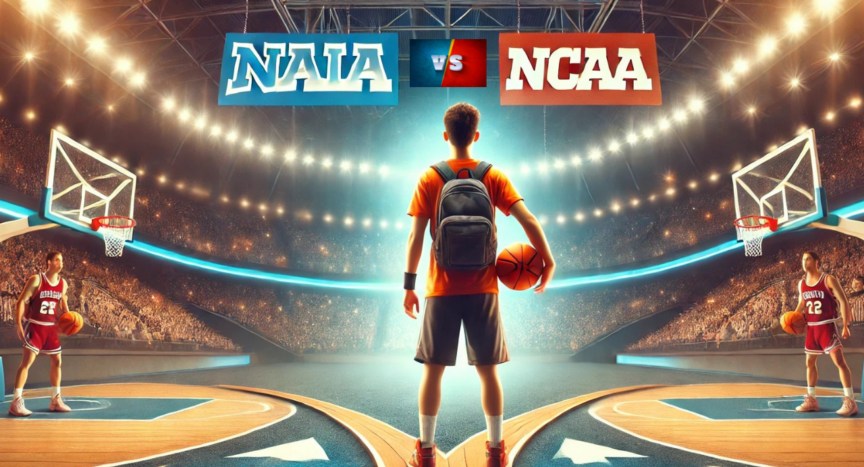
Choosing between the NAIA and NCAA is a big decision for student-athletes looking to play college basketball. While both offer competitive opportunities, scholarships, and a path to higher levels of play, they have key differences that can impact your decision. This NAIA vs NCAA comparison will break down the differences in eligibility, scholarships, competition levels, and overall experience to help you decide which path is best for you.
🔒 No spam. Unsubscribe anytime. Trusted by athletes, parents and coaches every month.
🏀 Understanding the NAIA and NCAA
✅ NAIA (National Association of Intercollegiate Athletics)
- Consists of two divisions (NAIA Division I & II merged into one in 2020).
- Offers a more intimate athletic and academic experience with smaller schools.
- Focuses on flexibility in recruitment and eligibility for student-athletes.
✅ NCAA (National Collegiate Athletic Association)
- Comprises three divisions (D1, D2, and D3), each with different levels of competitiveness.
- Typically consists of larger schools with a structured recruitment process.
- Has more stringent eligibility requirements and academic standards.
🎓 NAIA vs NCAA Eligibility Requirements
📌 NAIA Eligibility:
- Requires a 2.0 GPA in high school.
- Requires an ACT score of 18 or SAT score of 970 (or meet a combination of test scores and GPA requirements).
- Transfers and older players often have more flexible eligibility rules.
📌 NCAA Eligibility:
- NCAA D1 & D2 require a minimum GPA of 2.3 in core courses.
- Sliding scale for SAT/ACT scores based on GPA.
- Strict amateurism rules regarding participation in pro leagues or signing with agents.
🔍 How College Basketball Openings Helps: Easily find NAIA and NCAA schools recruiting players who meet specific eligibility requirements.
💰 NAIA vs NCAA Scholarships
🎓 NAIA Scholarships:
- Each team has a set scholarship budget (not all players get full rides).
- Coaches can divide scholarships between multiple players.
- Academic scholarships often supplement athletic awards.
🎓 NCAA Scholarships:
- D1 schools offer full scholarships to top players.
- D2 schools offer partial athletic scholarships combined with academic aid.
- D3 does not offer athletic scholarships but provides merit-based aid.
💡 College Basketball Openings Advantage: Search for programs offering the best scholarship opportunities for your situation.
🔥 NAIA vs NCAA Competition Level
🏆 NAIA Competition:
- Smaller schools with highly skilled players.
- Fewer restrictions on recruitment, allowing more flexibility for transfers.
- Good opportunity for athletes who may not fit the NCAA system but still want competitive college basketball.
🏆 NCAA Competition:
- D1 has the highest level of play with elite athletes.
- D2 is highly competitive, but offers more balance between athletics and academics.
- D3 focuses on student-athlete experience, with players competing for the love of the game.
📌 Tip: If you’re a late bloomer or transfer, NAIA may be the best fit. If you’re aiming for the highest level, NCAA D1 or D2 could be the right choice.
📊 NAIA vs NCAA: Pros and Cons
| Factor | NAIA | NCAA D1 | NCAA D2 | NCAA D3 |
|---|---|---|---|---|
| Competition Level | High | Elite | Strong | Moderate |
| Scholarships | Partial/Full | Full | Partial | None |
| Eligibility Flexibility | More flexible | Strict | Moderate | Strict |
| School Size | Smaller | Large | Medium | Small |
| Recruitment Rules | More flexible | Strict | Moderate | Limited |
📌 Use College Basketball Openings to explore programs at all levels and find the best fit for your athletic and academic needs.
🏆 Which Path Is Right for You?
✅ Choose NAIA if:
- You want more flexibility in eligibility and recruitment.
- You prefer smaller class sizes and a tight-knit community.
- You’re an older player or transfer needing another chance.
✅ Choose NCAA if:
- You’re an elite-level athlete seeking top-tier competition.
- You meet the strict academic and eligibility standards.
- You want a larger school experience with higher visibility.
📌 Still Unsure? Use College Basketball Openings to find schools recruiting for your position and academic background!
Final Thoughts
Deciding between the NAIA and NCAA is a crucial step in your basketball journey. Whether you’re looking for scholarship opportunities, competitive play, or academic balance, understanding the key differences helps you make an informed decision.
✅ Next Step: Explore open recruitment opportunities on College Basketball Openings to find programs actively looking for players like you!
💡 Start your recruitment journey today and find the right path to college basketball!



ADDITIONAL RELEVANT INFORMATION
How Do the Recruiting Rules and Calendar in the NAIA Differ from Those in the NCAA?
When it comes to recruiting student-athletes, the NAIA and NCAA operate under very different guidelines. One of the most significant differences is the level of regulation surrounding coach and athlete interactions.
Freedom in Communication
The NAIA offers a more relaxed approach. There are no strict rules governing the amount or type of contact between coaches and student-athletes. This open communication policy allows athletes to engage more freely with coaches, fostering a comfortable atmosphere for discussing potential opportunities.
In contrast, the NCAA has a structured system in place. It imposes specific recruiting calendars, including restrictive periods such as “dead periods” during which coaches cannot contact recruits. These regulations can limit the interactions between athletes and coaching staff, creating a more formal approach to recruitment.
Campus Visits
Regarding campus visits, the NAIA provides athletes complete freedom to explore numerous campuses without limitations. This flexibility enables students to evaluate multiple programs before making a decision.
The NCAA, however, places some restrictions on the number and nature of visits, often dictating when these visits can occur during the recruitment process.
Timing of Recruitment
NAIA coaches often adopt a different timeline for recruitment compared to their NCAA counterparts. NAIA coaches typically focus on athletes later in their high school careers, often securing commitments after major NCAA signing events, such as National Signing Day. This strategy allows them to identify unsigned talent who might have been overlooked by NCAA programs.
In summary, the lack of stringent regulations in the NAIA provides a more open, flexible recruiting environment, contrasting sharply with the NCAA’s structured and rule-bound approach. This distinction offers athletes a unique set of opportunities when considering their college sports journey.
What Opportunities Does the NAIA Offer to Student-Athletes?
For student-athletes seeking a blend of academics and athletics, the NAIA provides a wealth of opportunities. With over 250 institutions offering athletic scholarships, students can choose from 28 different sports. This breadth allows athletes to pursue their passion while reaping the benefits of financial aid.
Competitive Edge with Flexibility
The NAIA stands out with its commitment to flexibility. Programs here generally have fewer practice and competition hours. This approach fosters a less stressful environment, offering athletes the chance to juggle academic, athletic, and social commitments more effectively.
Open Communication Channels
A unique feature of the NAIA is its relaxed stance on communication, allowing coaches to engage with recruits freely throughout their high school years. This ongoing dialogue means you can build relationships with college coaches early on, removing the stress and mystery from the recruitment process.
Financial Incentives
When it comes to scholarships, the NAIA has awarded over $800 million in athletic aid. For those who may find NCAA opportunities limited, the NAIA can be a fertile ground for securing financial support, making higher education more accessible.
In short, the NAIA offers a dynamic platform for student-athletes to excel both on the field and off, with myriad opportunities that make the college experience rewarding and balanced.
Why do NAIA coaches tend to recruit athletes later in their high school career?
NAIA coaches often recruit athletes later in their high school careers because they strategically target unsigned talent. This approach allows them to scoop up skilled players who are still available after NCAA programs have completed their recruitment process, particularly following National Signing Day.
By waiting until after most athletes have committed to NCAA programs, NAIA coaches have the flexibility to assess a wider pool of potential recruits. This timing ensures they can identify and focus on talented individuals who may have been overlooked or who remained undecided earlier in the recruitment cycle.
In essence, this strategy of delayed recruitment maximizes the opportunities for both athletes and coaches, providing a mutually beneficial path for making informed decisions. It enables NAIA programs to attract strong players who might not yet have found the right fit in other college athletic programs.
What is the maximum number of scholarships available for each NAIA sport?
If you’re wondering about the maximum number of scholarships available for each sport under the NAIA umbrella, here’s a comprehensive breakdown:
Generous Scholarship Opportunities
- Football leads the pack with up to 24 scholarships available per team.
- In soccer, baseball, track and field, lacrosse, and competitive cheer, teams can offer up to 12 scholarships each.
Mid-Range Options
- Softball, wrestling, and competitive dance teams each have a cap at 10 scholarships.
- Basketball, volleyball, swimming & diving, and men’s volleyball teams can each award up to 8 scholarships to their student-athletes.
Specialized Athlete Support
- Golf teams are allotted 6 scholarships.
- Lastly, sports such as cross country, tennis, and bowling can each distribute a maximum of 5 scholarships per team.
This allocation allows athletes in diverse fields to pursue their academic and sports aspirations with substantial support from NAIA institutions.
How to Register with the NAIA Eligibility Center
If you’re diving into the world of NAIA sports as a first-time student-athlete, it’s essential to understand the registration process with the NAIA Eligibility Center. Here’s a streamlined guide to help you navigate this process with confidence:
Create Your Personal Profile
- Visit the NAIA Website: Start by heading over to PlayNAIA.org, the official site for NAIA registration.
- Profile Setup: You’ll need to create a personal profile. This involves entering key information about yourself, including details of your academic background and sports involvement.
Complete the Registration Process
- Eligibility Assessment: The NAIA Eligibility Center will assess your profile to determine if you meet the requirements to compete in an NAIA program. Approval is necessary before you can play.
- Bonafide Associations: Remember, the NAIA operates independently of the NCAA. If you’re considering schools from both organizations, you should register with both eligibility centers.
Navigating this process carefully ensures that you’re ready to participate in NAIA athletics and can focus on your sport with peace of mind.
How Does the Time Commitment for Athletics Differ Between NAIA and NCAA Programs?
Balancing academics, social life, and athletics can be a challenging feat for student-athletes. One of the main differences between NAIA and NCAA programs is the time commitment required for training and competition.
NCAA Division 1 and Division 2:
- Student-athletes in these divisions often dedicate 30 hours or more per week to their sports.
- The demanding schedule includes both training sessions and competitions, leaving limited time for other activities.
- To cope with the rigorous timetable, many athletes opt to take more demanding courses during summer sessions to stay on track for graduation.
NAIA Programs:
- In contrast, NAIA athletes experience a less intense athletics schedule.
- These programs typically have fewer practice and competition hours, allowing for a more flexible lifestyle.
- This structure enables student-athletes to more effectively balance their academic pursuits and social engagements without the stress of an overwhelming athletic commitment.
In summary, NAIA programs provide a more relaxed environment compared to the NCAA, allowing athletes to manage their time more efficiently while pursuing both their educational and social goals.
Differing Playing Time Opportunities in NAIA vs. NCAA Programs
When it comes to playing time, NAIA and NCAA programs offer distinct environments for athletes.
NCAA Division 1 teams are known for their highly competitive nature. Athletes not only need to secure a spot on the roster, but they also face intense competition throughout the season to earn meaningful minutes on the field or court. The sheer depth of talent in NCAA Division 1 programs often means that only the top-tier players consistently see extensive playing time.
In contrast, generally provide a more accessible platform for athletes looking to gain on-field experience. These programs often emphasize individual development and prioritize giving players ample opportunities to compete. As a result, athletes in the NAIA may find themselves with more regular playing time, allowing for greater personal growth and contribution to their teams.
In summary, while NCAA Division 1 offers the thrill of high-stakes competition, NAIA can be more accommodating for athletes seeking substantial playing time.
Does the NAIA Have a Signing Day?
In contrast to larger collegiate leagues, the NAIA does not designate a specific signing day. This flexibility means there is no official deadline for athletes to commit to NAIA institutions.
NAIA recruits enjoy the freedom to explore multiple offers without feeling rushed. They can commit to more than one NAIA institution temporarily while weighing their options. This lenient approach allows athletes to thoughtfully decide which college will best meet their academic and athletic needs.
Though some NAIA schools may ask athletes to sign a Letter of Intent, it doesn’t bind them to a particular institution. This informal process underscores the NAIA’s commitment to adapting to each recruit’s unique decision-making timeline.
Travel Differences Between NAIA and NCAA Programs
When it comes to collegiate sports, travel logistics can vary greatly between the NAIA and NCAA programs, often affecting athletes’ schedules and experiences.
NAIA Programs: Local and Balanced Travel
NAIA programs generally have a more localized competition circuit. Teams typically face opponents within their region, which allows schools to minimize travel time and expenses. Despite this regional focus, NAIA athletes still have the chance to compete for national championships, ensuring they don’t miss out on broader competitive opportunities.
NCAA Programs: National Reach
In contrast, NCAA teams frequently travel across the country. This can mean longer trips and more time on the road as they engage with a wider pool of competitors from coast to coast. This national scope gives athletes exposure to diverse and widespread competition, offering a different experience at the cost of potentially more travel time.
Deciding Factors
The choice between these associations often impacts an athlete’s schedule and lifestyle. NAIA’s reduced travel demands can lead to a more balanced collegiate experience, while the NCAA might offer more extensive travel that can be appealing to those seeking a broader competitive landscape. Whatever the preference, both paths offer unique advantages tailored to different needs and goals of student-athletes.
How many sports does the NAIA host national championships for?
The National Association of Intercollegiate Athletics (NAIA) organizes national championships for a total of 28 different sports. This organization, which includes over 250 schools nationwide, provides opportunities for student-athletes not only to compete but also to receive athletic scholarships. Annually, more than 83,000 participants are engaged in collegiate competitions through the NAIA, benefitting from a substantial $1.3 billion in scholarship funds that are awarded across various sports disciplines.
How many schools are in each NCAA division (D1, D2, D3)?
When exploring the structure of the NCAA, you’ll find it organized into three distinct divisions, each with a unique number of participating schools.
- Division I: Typically renowned for larger programs and competitive athletics, this division encompasses 363 schools.
- Division II: Known for balancing athletics with academics, this division features 314 schools.
- Division III: Emphasizing the college experience and athletic participation, this division includes 438 schools.
In total, the NCAA spreads across these divisions with a combined 1,115 institutions.
How many schools are part of the NAIA?
The NAIA, or National Association of Intercollegiate Athletics, includes over 250 schools across the United States. This governing body provides a platform for small college athletics programs, offering student-athletes the opportunity to secure athletic scholarships in various sports disciplines. Through its network of member schools, the NAIA supports a wide array of athletic opportunities at more than 250 institutions.
How many sports does the NAIA offer scholarships in?
The NAIA provides athletic scholarships for student-athletes in 28 sports. These opportunities are available across more than 250 schools throughout the nation.
How Does the NAIA Compare to the NCAA?
When assessing the quality of athletic programs, the National Association of Intercollegiate Athletics (NAIA) often parallels the NCAA, particularly at Division 3 (D3) levels. Top-tier NAIA teams frequently boast talent comparable to mid-to-high-level NCAA Division 2 (D2) schools. This similarity sometimes leads athletes to choose a top NAIA program over a lesser-ranked NCAA D2 option, given the equivalent level of competition.
Growth and Opportunities in the NAIA
The expansion of the NAIA brings with it an increased level of competition. More athletes are being recruited by NAIA institutions than in past years. This growth results in a deeper talent pool and more intense athletic contests.
Advantages for Student-Athletes
For student-athletes who might not meet NCAA recruitment standards, the NAIA offers a viable and competitive alternative. Participation in NAIA sports allows athletes to engage in rigorous levels of play and develop their skills within a supportive environment.
Key Takeaways
- Comparable Levels: NAIA programs are similar in quality to NCAA D3 and, in some cases, approach mid/high-level NCAA D2 standards.
- Expanding Talent Pool: The growth of NAIA institutions has led to a more competitive landscape.
- Viable Alternatives: For those on the cusp of NCAA eligibility, the NAIA provides robust competition and opportunities for athletic development.
Ultimately, the NAIA can be an excellent choice for athletes seeking both competitive play and valuable collegiate athletic experiences.
What sports are offered at NAIA institution?
If you’re curious about the sports available at NAIA institutions, you’ll find a diverse selection across different seasons for both men and women. NAIA schools provide an array of athletic opportunities, ensuring you can pursue your interests no matter the time of year.
Sports Offered at NAIA Institutions:
Men’s Sports:
- Fall Season: Popular options include football, soccer, and cross country.
- Winter Season: Dive into basketball, indoor track & field, and swimming & diving.
- Spring Season: Baseball, golf, and outdoor track & field are among the offerings.
Women’s Sports:
- Fall Season: Soccer, volleyball, and cross country are a few of the sports.
- Winter Season: Engage in basketball, swimming & diving, and indoor track & field.
- Spring Season: You’ll find softball, tennis, and outdoor track & field.
This wide-ranging selection enables students to participate in their sport of choice while enhancing their collegiate experience. For those looking to compare schools or discover where these sports thrive, consider exploring power ranking lists of NAIA schools to find the best fit for your athletic and academic goals.
Cost and Competitiveness: What Sets NAIA and NCAA Apart?
When it comes to balancing competitiveness and cost, NAIA and NCAA programs take distinct approaches that can impact both your college basketball experience and a school’s budget.
NAIA schools often prioritize a blend of athletic achievement and financial efficiency. These institutions offer strong competition, but with smaller athletic budgets compared to their NCAA counterparts. This means NAIA athletic departments typically spend less overall—sometimes up to 60% less—while still maintaining a high level of play. As a student-athlete, this can translate to well-resourced programs that may not have the same scale of facilities or funding as major NCAA schools, but still provide quality coaching, equipment, and opportunities.
On the other hand, NCAA schools, especially at the Division I level, are known for elite competition and larger budgets. Major NCAA programs invest heavily in recruiting, facilities, and travel, creating a highly competitive atmosphere that attracts top-tier athletes nationwide. However, these high costs can also mean more rigorous fundraising, ticket sales, and institutional support.
In summary:
- NAIA: Delivers competitive basketball at a lower logistical and financial cost, making it appealing for athletes looking for a solid college sports experience without the massive scale (or budgetary demands) of most NCAA programs.
- NCAA: Generally features larger athletic budgets—especially at D1 schools—fueling a high-stakes, highly publicized level of play with greater resources, but also higher financial expectations.
This difference in cost structure and competition is worth considering as you weigh which college basketball path fits your athletic goals and educational priorities.
Impact on Student-Athlete Experience and Institutional Financial Health
When deciding between athletic associations, it’s important to look beyond competition levels and consider how each environment shapes the student-athlete experience and an institution’s financial footing.
Student-Athlete Experience
- At associations with smaller schools, athletes often benefit from close-knit campus environments. This translates to increased access to coaching staff, flexible training schedules, and stronger support networks both on and off the field.
- In larger, more competitive divisions, student-athletes may encounter more regimented structures and heightened performance pressures, but also gain exposure to a wider stage and robust athletic resources.
Financial Stability for Institutions
- Schools participating in more intimate athletic associations frequently achieve a balanced approach—ensuring athletic success while keeping costs manageable. This remains especially useful for institutions seeking steady enrollment and enhanced retention.
- On average, institutions outside the largest governing association spend less per student-athlete, allowing them to allocate resources more efficiently. Many of these schools see a healthier net return from their athletics departments compared to their higher-spending peers.
- Over the past five years, several such schools have reported notable growth in student-athlete enrollments, contributing directly to institutional stability and sustainability.
Key Takeaways
- Schools with smaller athletics programs often discover that fostering personal connections and focusing on student outcomes not only elevates the student-athlete experience but also reinforces institutional well-being.
- The ability to sponsor a wide range of sports—while maintaining positive financial margins—illustrates that thoughtful association participation can deliver both community impact and fiscal responsibility.
Whether aiming for maximum exposure in a competitive environment or prioritizing a balanced, student-focused approach, the right athletic association can play a significant role in shaping both the lives of student-athletes and the long-term prosperity of the institution.
Key Advantages: Finances, Analytics, Autonomy & Student-Athlete Experience
Financial Flexibility
One of the core draws for many student-athletes is the financial flexibility smaller athletic associations can provide. Fewer institutional barriers often mean lower tuition costs, and there’s frequently more room to stack athletic, academic, and need-based scholarships. This can help keep student loan debt—which is no one’s idea of a good defensive strategy—off your back long after graduation.
Better Use of Analytics
Smaller programs tend to embrace emerging technology faster, using analytics tools like HUDL, Synergy, or InStat to refine player development and team strategies. This innovation isn’t just cool-sounding—it results in more tailored coaching, smarter training sessions, and better outcomes on and off the court.
Enrollment and Retention Benefits
Smaller colleges often look to athletics as a vital way to boost enrollment and keep students engaged through graduation. If you’re hoping for a close-knit campus where athletes are at the heart of the community, these programs often deliver—making athletes key players both in games and in shaping campus culture.
Autonomy and Flexibility for Coaches and Players
Without some of the rigid restrictions found in larger associations, coaches have more freedom to shape rosters and build team culture. That means more flexibility when it comes to recruiting late bloomers, transfers, or international students—and more room for unconventional talents to shine.
A Student-Focused Experience
What does all this add up to? A student-athlete experience that’s highly personal. You aren’t just a number on a roster; you’re part of a real community. Smaller teams, personalized attention from staff, and a focus on developing not just your game but your education and life skills—that’s a win-win for those prioritizing overall college experience alongside athletics.
Financial Considerations: NAIA vs NCAA
When looking at the financial landscape, the NAIA and NCAA differ in ways that can directly influence both student-athletes and their universities. If you’re thinking beyond wins and losses—and considering the true cost and impact of college sports—here’s what you should know:
NAIA Financial Benefits:
- Smaller Budgets, Strong Returns: NAIA schools generally operate with leaner athletic budgets, spending about 17% less per student-athlete than their NCAA counterparts.
- Maximized Resources: Despite spending less, many NAIA programs report a strong net return on their athletics investment, with average annual gains that can make a notable difference for a smaller institution’s bottom line.
- Positive Department Impact: Around 90% of NAIA athletic departments contribute a net positive return to their schools, helping fund broader university initiatives and provide more opportunities for student involvement.
NCAA Financial Landscape:
- Higher Investment, Larger Scale: NCAA schools, especially at the Division I level, invest significantly more in athletics—often 60% more on average—leading to bigger programs and higher-profile events.
- Potential for Revenue, Greater Risk: While powerhouse programs in the NCAA can generate substantial revenue through media deals and tournament runs, these benefits tend to be concentrated among the largest universities. Smaller NCAA schools may face higher expenses without the same financial upside.
Real-World Impact:
Some schools have found that aligning with the NAIA allows for healthier athletic department finances, stronger participation rates, and reinvestment across campus. This financial flexibility can also translate to more resources for academic programs or campus facilities.
In summary: If cost efficiency and program sustainability are top priorities, the NAIA may offer an appealing model—while the NCAA can provide greater exposure and investment, but often at a higher price tag.
Average Number of Sports Sponsored
When it comes to athletic variety, NAIA member schools typically sponsor an average of 18 varsity sports. For comparison, NCAA institutions often range widely—Division I schools may offer upwards of 20 sports, while Division III can vary but usually falls in the 15–18 range. This means NAIA schools frequently match or even exceed the breadth of programs offered by many NCAA counterparts, giving student-athletes plenty of options, whether you’re eyeing basketball, cross country, or even a niche sport like bowling.
How Athletic Association Membership Impacts Enrollment and Retention
One important factor to consider is how joining a particular athletics association can shape your college experience beyond the game itself—especially when it comes to attracting new students and keeping them enrolled. Here’s how these memberships can make a difference:
- Increased Student-Athlete Participation: Schools with tailored athletic programs often report steady growth in student-athlete enrollment. Smaller class sizes and strong campus communities appeal to many prospective students, particularly those looking for a well-rounded college journey.
- Enhanced Campus Life: Athletic teams can bring students together, fostering school spirit and community engagement. Events, games, and team culture give students tangible reasons to stay invested in campus life.
- Financial Stability for Institutions: When colleges successfully recruit more student-athletes, they fill classrooms and residences, directly supporting tuition revenue and the overall budget. This, in turn, helps keep programs funded and thriving.
- Retention Through Support: Programs that provide personalized coaching, academic guidance, and leadership opportunities tend to boost satisfaction rates. Student-athletes who feel seen and supported are more likely to stay through graduation.
These factors contribute not just to the vitality of the athletics department, but to the entire campus community—making the choice of association a strategic decision for schools seeking growth and long-term success.
Factors to Consider When Selecting a Collegiate Athletics Association
When deciding which collegiate athletics association aligns best with your institution, it’s important to weigh a few key considerations beyond just the level of competition. Here are some guiding questions to help navigate the choice:
- Institution Size and Culture: Are you looking for the close-knit community that smaller NAIA schools often provide, or does your institution thrive in the larger, more structured environment typical of the NCAA?
- Recruitment and Flexibility: Does your school value flexibility in recruiting student-athletes, or are you prepared to navigate the more rigorous and highly regulated recruiting landscape found in NCAA divisions?
- Academic and Athletic Balance: Consider how much emphasis you want to place on academics versus athletics. NCAA divisions, especially D1, often demand a significant commitment to athletics, while some associations offer more leeway to balance both.
- Resource Allocation: Review your budget for scholarships, facilities, and staff. NCAA programs often require greater financial investment, while other associations may offer a more cost-effective approach.
- Long-Term Institutional Goals: Think about enrollment strategies, community engagement, and the role athletics will play in supporting your school’s mission.
Reflecting on these factors will help ensure your selection not only matches your school’s current needs, but also sets the stage for future growth and success on and off the field.
Comparing Athletics Department Finances: NAIA vs. NCAA
When it comes to financial strategy, there are notable contrasts between NAIA and NCAA athletics departments. NAIA programs often achieve impressive financial efficiency, prioritizing not only athletic success but also delivering a healthy return on investment for their schools.
- Greater Cost Efficiency:
NAIA schools, on average, spend about 17% less per student-athlete than their NCAA counterparts—which means they’re stretching athletic budgets further and getting more bang for their buck. - Positive Financial Outcomes:
It’s not just about spending less; it’s about generating positive returns. Roughly 90% of NAIA athletic departments report a net gain for their institutions, with average net returns per student-athlete often exceeding $8,000. Across the board, the average NAIA sports department boasts a net return of around $4 million. - NCAA Investment Levels:
By comparison, NCAA schools, particularly in Division I, tend to have much higher athletic department budgets. On average, NCAA programs invest about 60% more in athletics than NAIA programs. This often means bigger facilities, larger staff, and increased operational costs—but not every school translates this spending into net positive returns.
Ultimately, for schools weighing athletic department spending against institutional benefits, NAIA programs often represent a more fiscally sustainable approach, while NCAA schools typically operate on a bigger financial playing field.
Enrollment Growth: NAIA vs. NCAA Divisions
Another important factor to consider is how student-athlete enrollment is changing across the different collegiate athletic associations. Over the past few years, NAIA schools have seen a significant surge in participation, with student-athlete numbers increasing at a faster pace compared to their NCAA counterparts.
For example:
- The NAIA experienced over 13% growth in student-athlete enrollment from 2019 to 2023.
- During the same period, NCAA Division II schools saw just over 8% growth.
- NCAA Division III trailed slightly behind with a bit more than 9% growth.
This trend suggests that more athletes are choosing the NAIA route, potentially drawn by its unique campus environments, recruitment flexibility, and the balance it offers between academics and athletics. As you evaluate your options, keep in mind how these growth trends might reflect the campus culture and competition you’ll encounter.
Choosing a Top NAIA Program Over Lower NCAA D2: Why It Happens
While NAIA schools are often compared to NCAA D3 in terms of size and environment, the upper echelon of NAIA basketball can rival—and sometimes match—the level of play found at many mid- to high-tier NCAA D2 programs. In fact, it’s not uncommon for a highly-ranked NAIA program to attract recruits who also have offers from lower NCAA D2 schools.
Why would an athlete make that choice?
- Similar competition level: The top NAIA teams field experienced, talented rosters. Competing here can mean facing athletes with skills and athleticism on par with strong D2 programs.
- Immediate impact and playing time: Players might have a better shot at earning significant minutes right away, especially if the NAIA program is actively seeking their position.
- Personal fit: Smaller class sizes, a tighter campus community, and a greater degree of flexibility (both in athletics and academics) draw some athletes to NAIA schools.
- Recruiting perks: Coaches at top NAIA programs can build personal relationships with prospects, sometimes easing the transition from high school to college hoops.
For athletes weighing their options, a top NAIA program provides not just a comparable competitive experience, but potentially a better all-around fit—on and off the court.
Transferring to an NAIA Program
If you’re considering transferring to play for an NAIA school, the process is relatively straightforward compared to some other collegiate associations. You’ll need to:
- Contact the NAIA school’s coach or admissions office to express your interest and confirm team roster availability.
- Work with your current school’s compliance office to obtain a formal release, which allows you to communicate with NAIA coaches.
- Provide transcripts from all previously attended colleges so the NAIA Eligibility Center can verify your academic standing and athletic history.
- Review and complete the NAIA Transfer Player Form, available on the NAIA website, which details your eligibility and outlines any residency requirements.
Many student-athletes find NAIA transfer rules to be flexible, especially for those who have already been out of high school for a year or more. Make sure to check with both the NAIA Eligibility Center and your prospective coach to ensure a smooth transition.
Are All NAIA Programs Fully Funded?
Not every NAIA school offers the same level of scholarship support. Some programs simply don’t have the funding to reach the maximum number of scholarships allowed by the NAIA. This means you might find that one NAIA school has enough budget for several full-ride athletes, while another may only have partial scholarships or a mix of smaller awards available. It’s smart to ask each coach you speak with about how their scholarship funding works—so you know exactly what to expect.
Are NAIA Athletic Scholarships Guaranteed Every Year?
It’s important to note that NAIA athletic scholarships are awarded on a year-to-year basis. The renewal of your athletic scholarship depends on factors like athletic performance, academics, and the coach’s decision—meaning there are no automatic multi-year guarantees. Each year, your scholarship status is reviewed, so maintaining eligibility and staying in good standing with your team and school is essential to keep your award for the following season.
Advice from Former NAIA Athletes and Coaches
If you’re still wondering whether NAIA is the right fit, consider the wisdom of those who’ve lived it firsthand. Coaches and former athletes often emphasize the unique strengths of the NAIA experience:
- Explore All Your Options: Don’t count out NAIA until you’ve truly explored what it has to offer. Attend a game or visit a campus—you might discover the right environment for your goals.
- Balance and Growth: NAIA programs are praised for helping student-athletes achieve both academic and athletic success. Core values like integrity, respect, and leadership are woven into daily life, giving you a chance to grow beyond the court or field.
- Competitive Play and Opportunity: NAIA teams are filled with skilled competitors—many on par with NCAA D1 and NCAA D2 talent. It’s a level where you’ll find tough games, driven teammates, and coaches invested in your development.
- Open-Mindedness Pays Off: The dream might be NCAA D1, but pathways to college basketball success are rarely straight lines. Be open to what NAIA can provide: scholarships, strong academics, and a supportive community.
Whether you’re a high school athlete considering your next step, or a transfer searching for a fresh start, the message is clear—look at NAIA with fresh eyes before making your decision.
NAIA Scholarship Distribution by Sport
NAIA schools have a set number of athletic scholarships available for each sport, but those scholarships aren’t distributed equally across the board. For example, basketball teams can award up to eight scholarships, while sports like football have larger team limits, with as many as 24. Other sports—such as soccer, baseball —typically sit at 12 scholarships per team. Meanwhile, softball and wrestling teams are capped at 10, and sports like golf, tennis, cross country, and bowling have between five and six.
A few key points to remember:
- Not every NAIA program is fully funded, so the maximum scholarship numbers represent a ceiling rather than a guarantee.
- Coaches have the flexibility to split scholarships among multiple athletes, often combining athletic awards with academics for the best packages.
- Smaller roster sports (like golf and tennis) might have fewer scholarships to offer, making each spot especially competitive.
Understanding how these scholarships are allocated can help you target sports and programs where your chances of financial aid may be higher.
When Do NAIA Coaches Recruit High School Athletes?
Unlike NCAA programs, NAIA schools aren’t bound by strict recruiting rules or rigid calendars. This gives coaches the freedom to approach prospective student-athletes at various points throughout high school. That said, most NAIA coaches often start connecting with athletes a bit later—typically during their senior year.
One common approach is for coaches to seek out talented players who remain unsigned after National Signing Day, which is when many NCAA recruits officially commit. So, if you’re considering NAIA schools, don’t worry if you haven’t heard from a coach early on—many NAIA coaches purposely wait until after this key date to reach out and discover athletes who may have slipped through the cracks.
NAIA Recruiting Rules and Timeline
One of the key distinctions of the NAIA is its approach to recruiting—it is refreshingly straightforward. Unlike the NCAA’s often labyrinthine regulations, the NAIA gives both coaches and student-athletes plenty of leeway. There are no formal recruiting calendars, dead periods, or contact limitations. Essentially, communication between you and college coaches is open and unregulated, creating a more relaxed environment to get to know schools and coaches throughout the process.
You’ll also find far more freedom when it comes to campus visits. While NCAA recruits must navigate a web of official and unofficial visit restrictions, NAIA allows you to tour as many campuses as you like. This flexibility can be especially helpful if you’re weighing programs in different regions or want to compare the vibes of multiple schools.
It’s worth noting that most NAIA coaches do their recruiting later in the high school journey, often setting their sights on athletes during senior year. Why the wait? Many NAIA programs strategically hold off until after National Signing Day—the point when most NCAA-bound athletes have already made their decisions. This gives coaches the chance to connect with talented student-athletes who are still on the market, and it gives you an opportunity to explore additional options if NCAA offers haven’t panned out.
In summary: NAIA recruiting is designed to be accessible and less pressured, letting you explore opportunities at your pace and prioritize genuine connections with coaches.
Signing With Multiple NAIA Schools
Unlike the NCAA, the NAIA does not impose an official signing date or strict deadline. Student-athletes have the freedom to sign with more than one NAIA school while considering their options. This added flexibility lets recruits thoughtfully explore different opportunities before making a final commitment to a college that fits both their academic and athletic goals.
NAIA Signing Day: What You Need to Know
One major difference between the NAIA and NCAA is how the signing process works. The NAIA doesn’t lock recruits into a specific “national signing day” or deadline. Instead, student-athletes have more freedom—they can consider offers from multiple NAIA colleges, take their time weighing options, and decide when they’re truly ready to commit.
Some colleges may ask you to sign a Letter of Intent, but it’s important to know that this isn’t binding in the way it is for NCAA programs. You’re not obligated to attend that school just because you signed; you remain free to choose your path until you officially enroll.
This flexibility can be a huge advantage if you want more time to find the program that truly fits—especially if your recruiting journey is evolving late in the process.
Core Values and Character Initiatives in the NAIA
A defining hallmark of the NAIA is its commitment to developing well-rounded student-athletes through its “Champions of Character” program. This initiative isn’t just a slogan—it shapes the culture of NAIA athletics across all member schools.
At the heart of the program are five core values:
- Integrity
- Respect
- Responsibility
- Sportsmanship
- Servant Leadership
These principles go beyond the playing field. They’re intentionally woven into athletic department policies, team activities, and daily campus life. The aim? To help student-athletes excel not only in their sport and the classroom, but also as leaders and community members.
By prioritizing character development alongside competition, the NAIA ensures that its athletes have every opportunity to grow as individuals who lead by example.
Campus Visits for NAIA Student-Athletes
One unique advantage for NAIA prospects is their flexibility when it comes to campus visits. Unlike some other organizations, the NAIA places no restriction on how many campuses you can explore. This means student-athletes are free to tour as many NAIA schools as they like until they find the program that feels just right. Taking full advantage of this opportunity can help you discover the perfect academic and athletic fit.
NAIA Eligibility Center: What It Is and How to Register
To compete in an NAIA sport, every prospective student-athlete must go through the NAIA Eligibility Center at PlayNAIA.org. This process is your official stamp of approval, ensuring you meet the association’s academic and athletic qualifications before stepping onto the field.
Here’s what to expect
- Create your profile: You’ll need to fill out a personal profile detailing your academic record and athletic participation.
- Submit required documents: Share your transcripts, standardized test scores, and any other necessary info.
- Get the green light: You must receive official clearance from the NAIA Eligibility Center before playing in NAIA competition.
A quick word to the wise: The NAIA and NCAA are entirely separate organizations. If you’re considering schools from both, you’ll need to register with each organization’s eligibility center to keep your college sports journey on track.
Sports Offered at NAIA Institutions
For players who play multiple sports, the NAIA opens the door to a wide array of varsity sports, giving student-athletes many avenues to shine, grow, and compete. Whether you’re looking to sprint down the track, drive the lane on the hardwood, or score the winning goal, NAIA schools likely have a program for you.
Men’s and Women’s Sports Here’s a closer look at the sports you’ll commonly find offered across NAIA campuses:
- Basketball
- Soccer
- Track & Field (Indoor and Outdoor)
- Cross Country
- Baseball (Men)
- Softball (Women)
- Volleyball
- Golf
- Tennis
- Swimming & Diving
- Wrestling (Men and Women’s programs growing rapidly)
- Lacrosse
- Bowling
- Competitive Cheer and Dance
- Football (Men)
Many institutions also feature sports like archery, eSports, and even flag football (for women)—reflecting the NAIA’s commitment to evolving with student interests.
Opportunities for Every Season
NAIA schools typically offer fall, winter, and spring sports, ensuring that athletes have year-round options to stay active. As with the NCAA, athletic scholarships are available, and teams regularly compete on regional and national stages.
Whether you’re eyeing a smaller roster spot or a powerhouse program, there’s likely an NAIA opportunity that matches your athletic and academic ambitions.
Are There More Opportunities for Playing Time and Scholarships in the NAIA?
For student-athletes looking for substantial court time and access to scholarships, NAIA schools often provide unique advantages. With generally smaller rosters than many NCAA teams—and the addition of junior varsity squads—there’s a greater chance for players to earn immediate minutes and develop on the court. This structure also means that coaches can spread their scholarship budgets efficiently, frequently offering partial scholarships to a wider pool of players.
While only about 1% of high school basketball athletes make it onto NCAA rosters, the NAIA serves as a viable and competitive pathway for those who wish to keep playing beyond high school. Aspiring collegiate players who value both scholarship support and the potential to make an early impact should keep NAIA programs firmly on their radar.
What Do NAIA Athletic Scholarships Cover?
NAIA athletic scholarships are designed to help student-athletes with key college expenses. These awards can be used to pay for tuition, mandatory student fees, required textbooks and class supplies, and on-campus room and board (up to your school’s official allowance for housing and meals). Each school determines its scholarship packages, so the total coverage may vary, but awards cannot exceed the actual cost of attending that school.
Age Limits and Season Eligibility in the NAIA
One key difference with the NAIA is that there’s no set age limit for student-athletes—older students are welcome. However, you can only compete in a sport for four seasons, and you must use those seasons within ten semesters (or fifteen quarters) of full-time enrollment. This gives athletes a bit more flexibility if they take time off or transfer schools, but still sets boundaries on eligibility.
More Opportunities for Playing Time and Scholarships?
If you’re wondering whether NAIA schools offer greater chances for playing time or scholarships compared to NCAA programs, the answer often comes down to size and flexibility. Because most NAIA colleges have smaller rosters and sometimes even junior varsity teams, student-athletes may find themselves on the court sooner and more often.
Competition for spots at NCAA schools—especially Division I—is extremely fierce, with only about 1% of high school athletes making that leap. For many players looking to maximize their minutes or pursue athletic scholarships, the NAIA represents a valuable path, expanding your opportunities to continue playing the game you love while also supporting your academic journey.
Typical Financial Aid for NAIA Student-Athletes
Wondering what NAIA athletes can expect in terms of financial support? On average, student-athletes at NAIA schools receive approximately $7,000 per year in aid, typically covering 10–20% of their total college costs. Each year, NAIA programs collectively award over $800 million to help their athletes make college more affordable. This makes NAIA a valuable option for those seeking both athletic participation and financial support.
What NAIA Athletic Scholarships Cover
NAIA athletic scholarships typically help offset the core expenses of attending college. Most commonly, these scholarships can cover:
- Tuition costs
- Mandatory school fees
- Books and course-related supplies
- Room and board, up to the school’s standard allowance
Keep in mind, every school’s scholarship package is unique—some will offer more coverage than others. Coaches may combine athletic awards with academic scholarships to help you meet your college costs.
NAIA Age and Participation Limits
Unlike the NCAA, the NAIA does not set an age cap for student-athletes. So whether you’re fresh out of high school or returning to college sports later in life, you’re eligible to compete. The main limitation is on participation: student-athletes are allowed up to four seasons of competition in a given sport and must use those seasons within 10 semesters (or 15 quarters) of college attendance. This setup offers greater flexibility, especially for transfers and those taking non-traditional academic paths.
Key Characteristics of NAIA Member Schools
NAIA schools tend to be on the smaller side, with most institutions enrolling around 1,400 full-time students. The student-athlete community makes up a considerable portion of the student body, typically around 300 students per campus.
A significant majority of these colleges are privately funded, and more than half have a faith-based foundation, meaning you’ll find many institutions affiliated with various religious traditions. This translates to campuses that often blend academics, athletics, and a strong sense of community or shared values within a smaller, close-knit environment.
What should student-athletes do if their high school does not provide a class rank?
If your high school doesn’t provide a class rank, don’t worry—you can still be eligible. In this case, you’ll need to meet the minimum required GPA (usually a 2.0) and achieve the qualifying ACT or SAT score. As long as you satisfy both of these criteria, your eligibility won’t be impacted by your school’s policy on ranking students.
How Many High School Athletes Make It to the NCAA?
Only about 1% of high school athletes ultimately compete at the NCAA level. This statistic highlights just how competitive the landscape is. For student-athletes eager to keep playing after graduation, it’s worth exploring the broader range of options—like those offered by the NAIA—where opportunities for roster spots and scholarships may be more attainable, thanks to smaller team sizes and junior varsity programs.